I mounted in 2014 my first sealed Spherical Roller Bearing in a highly contaminated area where snub pulley bearings of a conveyor application in a mining company was having maximum 6 months of service life. The sealed Spherical roller bearing performed 2 years till first symptom of higher temperature and vibration noticed without any replenishment of grease just based on initial grease filling in the factory.
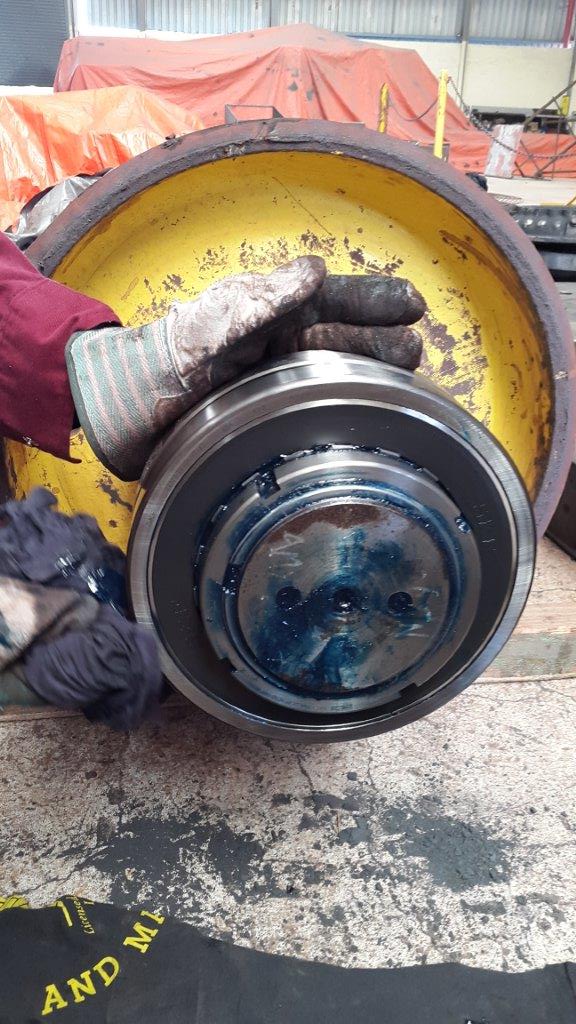
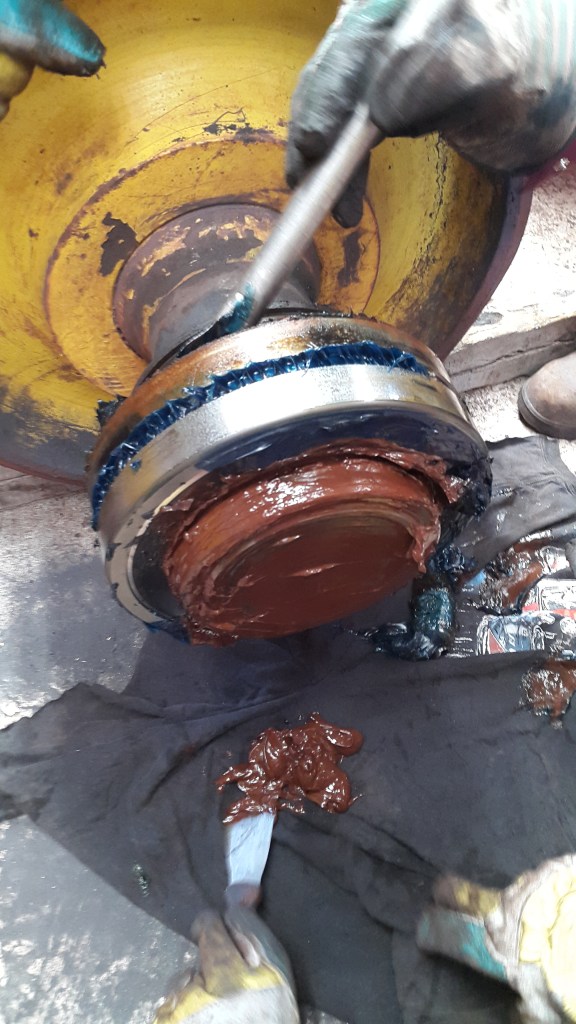
So based on my great field experience, decided to share all my knowledge and my field experiences about sealed spherical roller bearings. Below are the field photos of my best experience and you can read through the article below the photos.
Sealed Spherical Roller Bearings
A highly technical practical article for grease-lubricated contaminated environments
1. What a sealed spherical roller bearing is
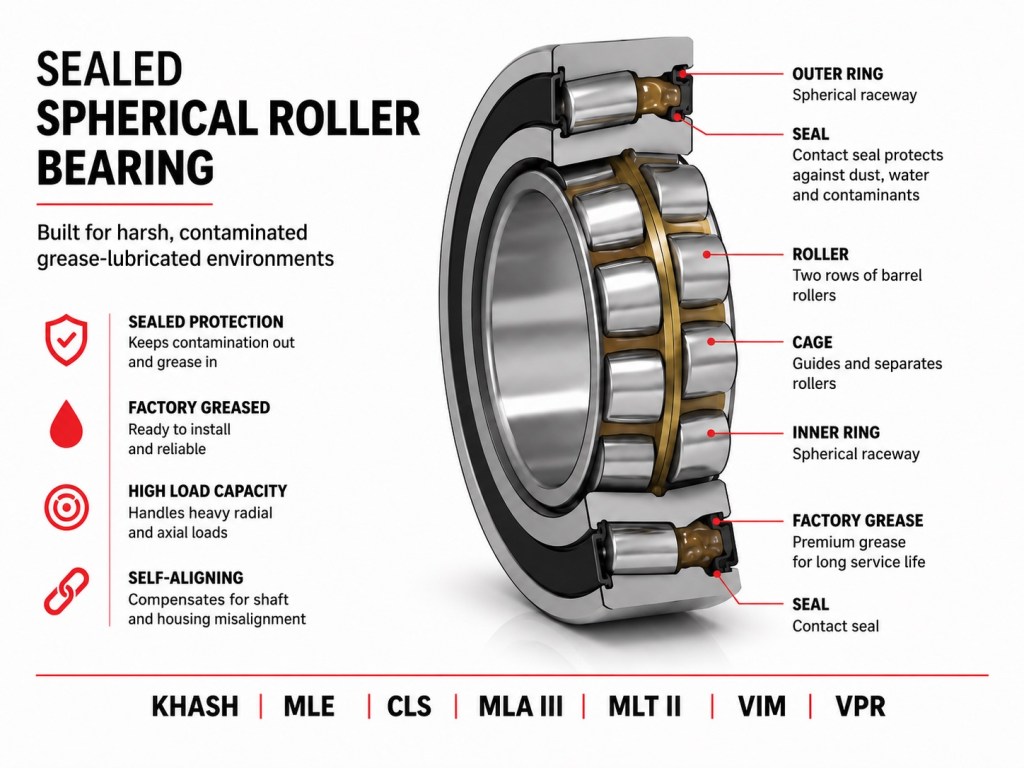
A sealed spherical roller bearing is a double-row spherical roller bearing fitted with integral seals on both sides and supplied with grease already inside the bearing. The bearing keeps the normal advantages of a spherical roller bearing: high radial load capacity, axial load capacity in both directions, and the ability to tolerate moderate shaft or housing misalignment. The sealed design adds a critical function: it protects the rolling contact directly from dirt, water, process dust, and grease loss. SKF describes sealed spherical roller bearings as pre-lubricated with specially formulated grease and equipped with contact seals to protect the bearing and lubricant from contaminants. (SKF)
In simple terms:
Open spherical roller bearing = load-carrying component.
Sealed spherical roller bearing = load-carrying component + internal grease system + contamination barrier.
That difference is very important in dirty grease-lubricated equipment.
2. Where sealed SRBs make the most sense
Sealed spherical roller bearings are strongest in applications where the main bearing killer is not pure fatigue, but contaminated grease.
Good applications include:
| Application | Contamination problem |
|---|---|
| Conveyor pulleys | Dust, belt fines, water, slurry, washdown |
| Crushers | shock load, dust, vibration, dirty environment |
| Vibrating screens | dust, water, severe vibration |
| Bucket elevators | grain, cement, mineral dust |
| Fans and blowers | dust-laden air, poor access |
| Material handling rollers | water, dust, outdoor exposure |
| Quarry and mining equipment | abrasive particles and moisture |
| Cement plant equipment | fine abrasive powder |
| Steel and metals equipment | scale, dust, water, heat |
| Pulp and paper grease-lubricated rolls | moisture and process contamination |
NSK specifically positions sealed spherical roller bearings for harsh and contaminated conditions, listing benefits such as reduced grease consumption, less grease leakage, longer maintenance intervals, and prevention of sudden failure due to blocked grease lines. (NSK Global)
The key point is this:
A sealed SRB is not selected only because the load is high. It is selected because the lubricant must be kept clean.
3. Why contamination destroys grease-lubricated SRBs
In a grease-lubricated spherical roller bearing, the actual rolling contact is protected by a very thin lubricating film. Under ideal operation, the rollers and raceways are separated by an elastohydrodynamic lubrication film.
A useful technical indicator is the lambda ratio:
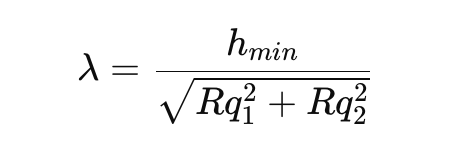
Where:
| Symbol | Meaning |
|---|---|
| (h_{min}) | minimum lubricant film thickness |
| (Rq_1) | RMS roughness of roller surface |
| (Rq_2) | RMS roughness of raceway surface |
| (\lambda) | film thickness ratio |
When contamination enters, the problem is not only that dirt is present. The particles pass through the rolling contact and create dents, scratches, raised edges, abrasive wear, and stress raisers. Water reduces film strength, promotes corrosion, and accelerates grease degradation.
So the sequence is usually:
- Contamination enters the housing.
- Grease carries particles toward the bearing.
- Particles pass through the roller/raceway contact.
- Raceway dents and surface distress form.
- The lubricant film becomes unstable.
- Vibration and temperature increase.
- Microspalling begins.
- Macroscopic spalling and failure follow.
This is why a bearing can be correctly sized for load but still fail early. The calculation may be correct, but the lubricant cleanliness is not.
4. The main advantage: the seal protects the bearing directly
Traditional grease-lubricated bearing housings depend on external housing seals. In dirty environments, those seals are often attacked by slurry, dust, belt fines, washdown water, misalignment, shaft runout, and poor maintenance.
A sealed spherical roller bearing creates a second protection layer directly at the bearing.
A good contaminated-environment arrangement becomes:
External housing seal → grease barrier cavity → sealed SRB → clean internal bearing grease
This is much stronger than relying only on the housing seal.
NSK’s conveyor-pulley literature specifically highlights hard particle and water contamination as a constant challenge to bearing life in mining and aggregate conveyors, and presents sealed spherical roller bearing designs as a countermeasure to contamination ingress.
5. Construction of a sealed spherical roller bearing
A sealed spherical roller bearing normally includes:
| Component | Function |
|---|---|
| Outer ring | Common spherical raceway for self-alignment |
| Inner ring | Two raceways for the two roller rows |
| Barrel rollers | High radial load and axial load capacity |
| Cage | Controls roller spacing and guidance |
| Integral seals | Keep grease in and contamination out |
| Factory grease | Correct initial grease type and quantity |
| Lubrication groove/holes | Allows relubrication on many designs |
| Seal land | Running surface for seal lip contact |
Schaeffler states that sealed spherical roller bearings are supplied greased and sealed so that the bearing is correctly lubricated from the beginning and contaminants cannot enter from outside. It also notes that many sealed SRBs have a circumferential groove and three lubrication holes in the outer ring as standard to allow relubrication. (Schaeffler)
That outer-ring groove and hole arrangement matters in field maintenance. It means the bearing may be relubricatable, but only if the housing grease path lines up correctly with the bearing lubrication groove.
6. Seal materials and temperature limits
The seal is a functional engineering component, not just a cover. It must resist grease chemistry, heat, water, abrasive particles, and shaft misalignment.
Common seal materials include:
| Seal material | Typical use |
|---|---|
| NBR / nitrile rubber | General industrial service, grease lubrication, moderate temperature |
| HNBR | Improved heat and abrasion resistance in severe-duty versions |
| FKM / fluoro rubber | Higher temperature resistance and chemical resistance |
Schaeffler lists NBR seals under suffix 2RSR and fluoro rubber seals under suffix 2VSR, with different temperature capabilities and grease combinations depending on the design. (Schaeffler)
Practical point:
Do not heat sealed bearings with a torch.
The heat can damage the grease, harden or deform the seal, and change the internal clearance condition. For sealed SRBs, use controlled heating methods approved by the bearing manufacturer.
7. Misalignment: the bearing can self-align, but the seal has limits
A spherical roller bearing can tolerate misalignment because the outer ring raceway is spherical. However, the integral seals cannot tolerate unlimited angular movement.
This is one of the biggest misunderstandings in the field.
The bearing may still be mechanically capable of self-alignment, but the seal lip can become distorted, overloaded, opened, or worn if the shaft deflection is excessive. SKF states that to avoid harmful effects on sealing performance, misalignment for sealed spherical roller bearings should not exceed 0.5°.
Practical meaning:
The seal often becomes the limiting component, not the rollers.
In pulley applications, this matters because belt tension and shaft deflection can tilt the bearing inner ring relative to the housing. If shaft bending is high, the seal may leak even though the spherical roller bearing geometry still appears suitable.
8. Grease strategy: sealed does not mean “pump grease forever”
A sealed SRB is normally factory-filled with grease. The internal grease volume is controlled. Overgreasing can be just as damaging as undergreasing.
SKF gives the following relubrication quantity for sealed spherical roller bearings when relubrication is required:
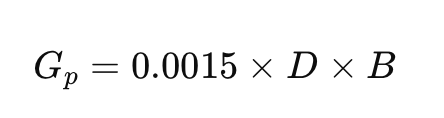
Where:
| Symbol | Meaning |
|---|---|
| (G_p) | grease quantity in grams |
| (D) | bearing outside diameter in mm |
| (B) | bearing width in mm |
SKF also states that the grease should be applied slowly through the lubrication holes in the outer ring, preferably while the bearing is rotating, and recommends using the same grease as the initial fill.
This is very important.
Do not treat a sealed SRB like an open bearing by pumping grease until it purges everywhere. That can build pressure behind the seals, lift seal lips, displace seals, churn grease, and increase operating temperature.
9. Housing grease vs internal bearing grease
This is a major field issue.
With sealed spherical roller bearings, there are two grease zones:
| Zone | Description |
|---|---|
| Internal bearing grease | Factory grease inside the sealed bearing |
| Housing cavity grease | Grease outside the bearing, inside the housing |
A housing may be full of grease while the bearing itself is not receiving new grease. This happens when the grease nipple feeds the housing cavity but not the bearing lubrication groove.
So during a rebuild, ask:
- Does the housing grease passage line up with the bearing lubrication groove?
- Are the outer-ring lubrication holes present?
- Are the holes covered or blocked?
- Does the grease path reach the bearing interior?
- Is there a relief path?
- Is the bearing meant to be relubricated at all?
Schaeffler notes that sealed spherical roller bearings may have relubrication holes as standard, but closed outer-ring versions are also available where relubrication is not required. (Schaeffler)
That means the bearing designation matters. The technician must not assume every sealed SRB is greased the same way.
10. Overgreasing failure mode
Overgreasing is common when a site changes from open SRBs to sealed SRBs but keeps the same lubrication schedule.
Possible results:
- high running temperature,
- seal displacement,
- grease leakage,
- grease churning,
- increased torque,
- blackened grease,
- grease hardening,
- seal lip damage,
- roller skidding at startup,
- false diagnosis of “bad bearing.”
Practical warning:
If the bearing temperature rises after greasing, suspect excess grease, wrong grease, or blocked relief.
A sealed bearing does not need a cavity packed solid with grease. In many contaminated environments, grease outside the bearing is used as a protective barrier for the external housing seal, but that grease must not be allowed to pressurize and damage the bearing seals.
11. Contamination protection system: best practice
In severe grease-lubricated contamination, the best design is not just “sealed bearing.” It is a layered defense system.
Recommended layered protection
| Layer | Purpose |
|---|---|
| External housing seal | Keeps bulk contamination out |
| Grease barrier cavity | Captures dust and water before reaching bearing |
| Sealed SRB | Protects internal rolling contact |
| Correct grease | Maintains film and corrosion protection |
| Relief path | Prevents grease pressure damage |
| Clean relubrication practice | Prevents dirt injection during greasing |
| Regular inspection | Detects seal failure early |
The sealed SRB is the most important internal barrier, but it should work together with the housing seal and maintenance procedure.
12. Mounting requirements
Sealed SRBs need careful mounting because the internal rollers and raceways are hidden behind the seals.
Correct mounting rules
| Rule | Reason |
|---|---|
| Keep packaged until installation | prevents dirt entry |
| Do not wash the bearing | removes or contaminates factory grease |
| Do not remove seals unnecessarily | damages protection system |
| Do not strike bearing directly | causes brinelling or seal damage |
| Use correct heating method | protects grease and seals |
| Confirm internal clearance | prevents tight or loose mounting |
| Use correct sleeve/shaft fit | prevents creep and fretting |
| Protect seal lips | prevents early contamination entry |
| Align grease groove with feed | ensures relubrication works |
| Confirm grease relief | prevents seal pressure failure |
For tapered-bore sealed SRBs, correct drive-up is critical. Too much drive-up reduces internal clearance; too little drive-up allows looseness and fretting.
NSK highlights removable-seal designs for conveyor pulley service that allow more accurate clearance measurement during mounting, which is valuable because sealed bearings can otherwise make clearance checking more difficult.
13. Internal clearance and residual clearance
The mounted bearing must have correct residual radial internal clearance.
Too little residual clearance
Possible results:
- high temperature,
- reduced grease life,
- roller/raceway overstress,
- cage distress,
- seal heat,
- premature spalling.
Too much residual clearance
Possible results:
- vibration,
- poor load distribution,
- roller skidding,
- fretting on shaft or sleeve,
- impact loading,
- seal misalignment.
For contaminated heavy-duty equipment, many bearings are supplied with increased clearance such as C3 or C4 depending on fits, temperature gradient, shaft expansion, and operating load. The correct clearance class must be selected by calculation or manufacturer recommendation, not by habit.
14. Failure modes specific to sealed SRBs in contaminated grease service
1. Seal damage during installation
A small cut, dent, or rolled lip can allow contamination to enter from the first day.
2. Overgreasing
Too much grease or aggressive pumping can damage seals and raise temperature.
3. Mixed grease
Incompatible grease can harden, soften, separate, or block grease flow.
4. Water ingress
Water causes corrosion, emulsification, grease breakdown, and hydrogen-assisted surface distress.
5. Abrasive contamination
Dust, fines, and slurry create denting, scratching, three-body abrasion, and spalling.
6. Misalignment beyond seal capability
The bearing may self-align, but the seal lip can lose contact or wear rapidly.
7. Wrong relubrication path
Grease may fill the housing but not enter the bearing.
8. Blocked relief path
Pressure builds and pushes grease past seals or displaces seal components.
9. Incorrect mounting clearance
Wrong drive-up or fit causes heat, looseness, or premature fatigue.
10. Electrical current damage
In equipment connected to VFD-driven motors, bearing seals do not prevent electrical erosion. If shaft current is present, electrical protection must be handled separately.
15. Advantages over open SRBs in contaminated grease environments
A. Better lubricant cleanliness
The bearing is protected at the rolling contact, not only at the housing boundary.
B. Lower grease consumption
The seal retains grease inside the bearing and reduces unnecessary grease loss. NSK lists reduced grease consumption and reduced grease leakage as benefits of sealed spherical roller bearings. (NSK Global)
C. Longer maintenance intervals
Because the bearing is internally protected, relubrication intervals can often be extended when operating conditions allow. NSK also lists increased maintenance intervals as a benefit. (NSK Global)
D. Less risk from blocked grease lines
In dirty plants, grease lines can become damaged, blocked, or contaminated. A sealed bearing with correct grease fill is less dependent on frequent grease delivery.
E. Cleaner work area
Less grease leakage means less dirt accumulation around housings and less housekeeping.
F. Better protection during shutdowns
The seals help protect the bearing during storage, shutdown, transport, and standby.
G. More stable lubrication control
Factory grease quantity and grease type reduce human error during initial assembly.
16. Limitations
Sealed SRBs are excellent, but they are not always the answer.
Be careful when there is:
| Condition | Concern |
|---|---|
| Very high speed | seal friction and heat |
| High continuous temperature | reduced grease and seal life |
| Severe shaft deflection | seal lip distress |
| aggressive chemical exposure | seal compatibility issue |
| poor housing condition | contamination can still enter |
| poor installation practice | seal damage or clearance error |
| uncontrolled greasing | overgreasing damage |
| unknown grease history | compatibility risk |
| VFD shaft current | electrical erosion still possible |
The bearing is sealed, not magical. It still needs correct selection, correct mounting, and correct lubrication control.
17. Practical conversion checklist: open SRB to sealed SRB
Before converting, check:
- Same boundary dimensions.
- Load rating suitability.
- Speed limit with contact seals.
- Operating temperature.
- Shaft and housing fits.
- Shaft deflection and misalignment.
- Seal material compatibility.
- Grease compatibility.
- Relubrication requirement.
- Housing grease passage alignment.
- Grease relief path.
- External housing seal condition.
- Storage and installation cleanliness.
- Clearance measurement method.
- Whether the application needs C3 or C4 clearance.
- Whether contamination is solid, water, slurry, or chemical.
- Whether automatic lubricators must be reset.
- Whether old grease lines must be cleaned or abandoned.
A sealed bearing conversion fails when the bearing is changed but the old lubrication habits remain unchanged.
18. Practical maintenance standard
A good site standard would say:
Sealed spherical roller bearings used in contaminated grease-lubricated equipment shall be treated as a sealed lubrication system. The bearing shall not be washed, opened, torch-heated, overgreased, or relubricated with unapproved grease. Relubrication shall be performed only when required, using compatible grease, calculated quantity, slow application, correct feed path, and confirmed relief. Seal condition, operating temperature, vibration, grease condition, and contamination around the housing shall be inspected routinely.
19. Failure investigation checklist
For a failed sealed SRB, collect the following before cleaning:
Bearing evidence
- bearing designation,
- clearance class,
- suffix,
- seal type,
- cage type,
- grease type,
- raceway condition,
- roller condition,
- cage wear,
- seal lip condition,
- seal displacement,
- internal grease condition.
Housing evidence
- external seal condition,
- grease path,
- relief path,
- housing bore fit,
- fretting,
- corrosion,
- contamination entry path,
- water marks,
- old grease pockets.
Shaft evidence
- shaft fit,
- sleeve condition,
- fretting,
- corrosion,
- shoulder contact,
- locknut condition,
- axial clamping,
- runout,
- shaft deflection history.
Lubrication evidence
- grease brand,
- grease thickener,
- base oil viscosity,
- relubrication interval,
- amount per cycle,
- manual or automatic system,
- signs of mixed grease,
- signs of water,
- signs of overheating.
20. Strong technical summary
A sealed spherical roller bearing is best understood as a contamination-control bearing system for heavy grease-lubricated equipment.
Its main purpose is to protect the rolling contact from the real enemies of harsh-duty bearings:
abrasive particles, water, poor grease cleanliness, overmaintenance, and lubricant loss.
Its biggest advantages are:
- cleaner internal grease,
- reduced contamination ingress,
- reduced grease consumption,
- reduced grease leakage,
- longer maintenance intervals,
- better reliability in dirty environments,
- less dependence on frequent manual greasing.
Its biggest risks are:
- overgreasing,
- wrong grease,
- mixed grease,
- damaged seals,
- excessive misalignment,
- wrong mounting clearance,
- blocked grease paths,
- assuming “sealed” means “maintenance-free.”
Main takeaway
For grease-lubricated contaminated environments, sealed spherical roller bearings can be a major reliability upgrade.
But the success condition is clear:
Install clean. Mount accurately. Protect the seals. Use the correct grease. Relubricate only by calculation. Control contamination outside the bearing. Monitor temperature and vibration.
A sealed SRB fails when it is treated like an open bearing. It performs best when it is treated as a complete sealed lubrication and contamination-control system.

