Steel, Brass, or Polyamide Cages in Paired Angular Contact Ball Bearings
By Khash
In one large regional oil and gas company, the question was not simply: “Which bearing brand should we use?” The real question was more technical:
For each pump, which cage material should be used in the paired angular contact ball bearings — steel, brass, or polyamide?
That question matters because the cage is often ignored until it fails. The bearing rings and balls carry the load, but the cage controls ball spacing, ball guidance, lubricant movement, cage stability, and running behavior. In pump thrust bearings, especially paired angular contact ball bearings, the cage can become the weak link when speed, heat, vibration, preload, oil condition, and process criticality are not properly considered.
1. Why pump bearing cage selection matters
Pump bearings are not all exposed to the same duty. A small clean-water utility pump does not challenge the bearing the same way as a hot hydrocarbon process pump, boiler feed pump, crude charge pump, lean amine pump, seawater injection pump, or high-speed light hydrocarbon pump.
A cage that works well in one pump may be a poor choice in another.
The wrong cage can lead to:
- cage pocket wear,
- cage cracking,
- cage instability,
- ball skidding,
- high bearing temperature,
- lubricant churning,
- cage discoloration,
- debris generation,
- bearing noise,
- sudden bearing failure.
For many process pumps, especially API-style centrifugal pumps, the thrust bearing arrangement commonly uses two 40° single-row angular contact ball bearings arranged back-to-back, with axial clearance or preload selected according to application requirements. SKF’s pump bearing handbook describes this back-to-back arrangement as recommended for most pump applications because it supports tilting moments and controls the bearing-pair clearance through inner-ring clamping.
2. The cage is not decoration
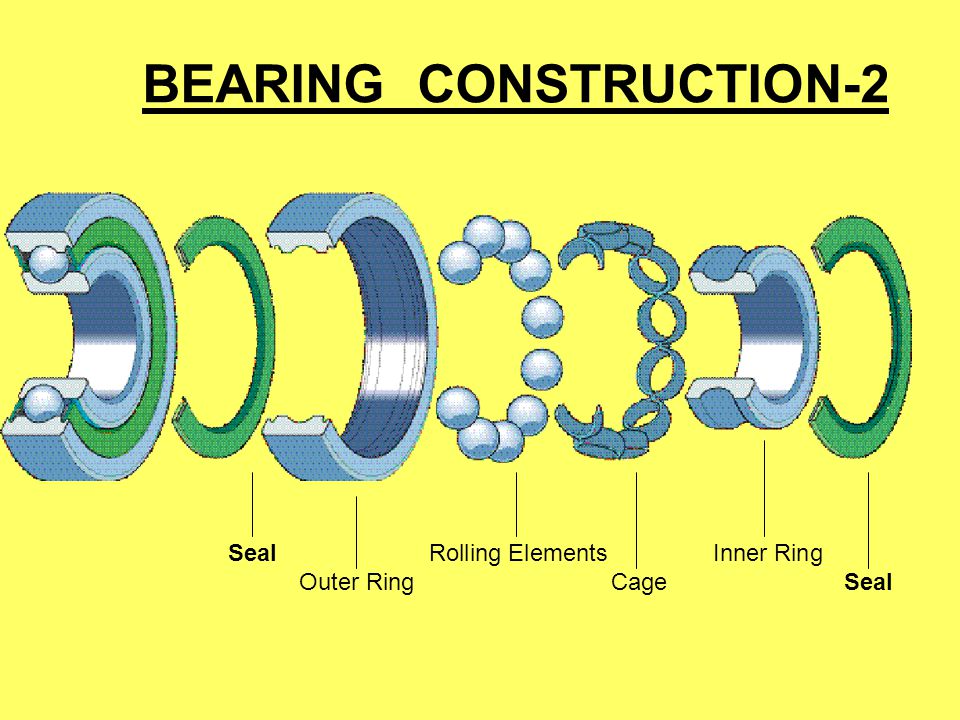
The cage does not normally carry the main pump load. That job belongs to the balls and raceways. But the cage has several critical functions:
| Cage function | Why it matters in pumps |
|---|---|
| Separates balls | Prevents ball-to-ball contact and sliding |
| Guides rolling elements | Controls ball movement and stability |
| Supports lubricant flow | Influences oil distribution and heat generation |
| Handles inertia | Important at high speed and during start/stop |
| Maintains spacing under vibration | Important during cavitation, hydraulic instability, and trips |
| Survives temperature and chemistry | Critical in oil and gas process service |
| Resists cage pocket wear | Important when lubrication is marginal |
A bearing cage failure is often called a “cage problem,” but in many cases the cage is only the part that exposed the real problem: wrong preload, poor oil, high temperature, high vibration, contaminated lubrication, misalignment, or wrong bearing arrangement.
3. The three practical cage materials
For this article, the selection is limited to the three materials requested:
- Pressed steel cage
- Machined brass cage
- Polyamide cage
Schaeffler describes angular contact ball bearings as being available with cages made from polyamide, sheet steel, or brass, which matches the practical cage options normally discussed for industrial pump bearing selection. (Schaeffler Medias)
4. Steel cage
Practical meaning
A steel cage is normally the practical economical choice for standard pump service. It is common, robust enough for many normal duties, and less expensive than machined brass.
Strengths
- Good general-purpose choice.
- Good dimensional stability.
- Better high-temperature tolerance than polyamide.
- Good availability.
- Usually cost-effective.
- Suitable for many standard plant pumps.
- Less sensitive to lubricant chemistry than polymer cages.
- Often a good default where pump duty is moderate and clean.
Weaknesses
- Can suffer from fatigue cracking under severe vibration.
- Pressed construction may be less robust than solid machined brass in severe service.
- Cage pockets can wear if lubrication is poor.
- Corrosion is possible if water contamination is present.
- Can generate metallic debris if it fails.
- May not be the best option for high-shock, high-criticality process pumps.
Best pump fit
Steel cages are normally suitable for:
- general-purpose process pumps,
- cooling water pumps,
- utility pumps,
- moderate-duty horizontal pumps,
- pumps with clean oil,
- moderate temperatures,
- moderate speed,
- stable hydraulic operation,
- good lubrication discipline.
Avoid or review carefully when
- pump is highly critical,
- repeated vibration/cavitation occurs,
- process temperature is high,
- oil is frequently contaminated,
- pump has frequent starts and trips,
- previous steel cage distress was found,
- high thrust reversal is expected.
Khash verdict
Steel cage = practical economical option for standard pump duty.
Use it where the pump is stable, oil is clean, temperature is controlled, and criticality is moderate.
5. Brass cage
Practical meaning
A machined brass cage is often the robust severe-duty choice. In critical pump service, especially oil and gas process pumps, brass cages are commonly selected because they tolerate heat, vibration, shock, and demanding operating conditions better than many standard cage options.
NSK describes one pump-focused angular contact bearing design with a high-strength machined-brass cage for harsh API 610 pump applications, highlighting high load, high speed, 40° contact angle, precision accuracy, and axial clearance control to avoid ball skidding. (NSK Global)
Strengths
- Excellent mechanical robustness.
- Good for high temperature compared with polyamide.
- Strong cage pocket geometry.
- Good for severe vibration and process disturbance.
- Good dimensional stability.
- Strong choice for critical oil and gas pumps.
- Better survival margin in marginal lubrication than polyamide.
- Suitable for many high-load/high-thrust pump applications.
SKF’s cage material guidance lists steel cages as suitable up to high operating temperatures and brass cages up to about 250 °C, depending on bearing design and application limits; this supports why brass is often preferred where temperature margin is important. (SKF)
Weaknesses
- Heavier than steel or polyamide.
- Higher cage mass can increase inertia at very high speed.
- Can contribute to more heat than lightweight polymer cages in some high-speed applications.
- More expensive.
- Must be checked for chemical compatibility in certain aggressive environments.
- Brass debris can be found in oil if cage wear occurs.
Chemical caution
In oil and gas, brass selection must not ignore chemistry. Some sour, amine, ammonia, or chemically aggressive environments require careful review of cage metallurgy, lubricant additive chemistry, and compatibility with “yellow metals.” SKF’s discussion of gas-industry compressor bearings notes that industry has historically been cautious with yellow metals in sour-gas applications, while residual-stress-free machined brass designs have been successfully used in some applications; pressed brass and machined brass should not be treated as identical in severe chemical service. (Evolution SKF)
Best pump fit
Brass cages are often the strongest choice for:
- API process pumps,
- refinery critical pumps,
- petrochemical pumps,
- hot oil pumps,
- high-temperature services,
- high thrust loads,
- high vibration pumps,
- pumps with frequent start/stop,
- pumps with unstable hydraulic conditions,
- severe-duty pump bearing housings,
- pumps with history of cage cracking or cage pocket wear.
Avoid or review carefully when
- very high speed and low friction are the dominant selection drivers,
- yellow-metal compatibility is questionable,
- lubricant has aggressive additive chemistry,
- the pump service involves sour/chemical exposure requiring material review,
- cost is the only reason for selection.
Khash verdict
Brass cage = top robustness choice for severe and critical pump service.
Use it when reliability margin is more important than lowest cost.
6. Polyamide cage
Practical meaning
A polyamide cage is the lightweight, low-friction option. It can run very well in clean, cooler, controlled conditions. It is often attractive for lower friction, quieter operation, reduced cage mass, and good high-speed behavior.
Strengths
- Low mass.
- Low friction.
- Quiet running.
- Good sliding behavior against lubricated steel.
- Reduced heat generation in suitable conditions.
- Good for clean lubrication.
- Good for moderate-temperature, high-speed applications when approved by the bearing OEM.
Weaknesses
- Temperature-sensitive.
- Can age or lose strength if operated too hot.
- Sensitive to some synthetic oils and aggressive additive packages.
- Can absorb moisture.
- Can soften, embrittle, or deform depending on oil, temperature, and chemistry.
- Not ideal for dirty, hot, chemically aggressive, or highly critical pump services without review.
SKF polymer cage guidance treats permanent operating temperatures above about 120 °C as a reason to consider higher-performance polymers rather than standard polyamide, and SKF ball-bearing temperature guidance separately indicates that steel and brass cages can generally tolerate higher bearing temperatures than polymer cages. (SKF Media Hub)
Best pump fit
Polyamide cages can be suitable for:
- clean oil systems,
- moderate temperature pumps,
- high-speed but well-controlled applications,
- low-to-moderate load pumps,
- stable hydraulic duty,
- non-severe service,
- pumps where low friction and low noise matter,
- OEM-approved bearing designs.
Avoid or review carefully when
- bearing outer ring temperature is high,
- process heat conducts into the bearing housing,
- oil oxidation is common,
- synthetic lubricant compatibility is unknown,
- EP additives are aggressive,
- pump is in sour, amine, solvent, or aggressive chemical duty,
- pump experiences cavitation or severe vibration,
- oil cleanliness is poor,
- the pump is highly critical and failure consequence is high.
Khash verdict
Polyamide cage = excellent when the environment is clean, cool, and controlled.
Do not use it as a blind substitute in hot, dirty, or chemically aggressive pump service.
7. Cage selection matrix
| Selection factor | Steel cage | Brass cage | Polyamide cage |
|---|---|---|---|
| General-purpose pump duty | Very good | Very good but often over-specified | Good if temperature/chemistry are suitable |
| Severe process duty | Moderate to good | Excellent | Usually not first choice |
| High temperature | Good | Excellent | Limited |
| High speed | Good | Good to very good | Very good if clean/cool |
| Vibration and shock | Good | Excellent | Fair to moderate |
| Oil contamination | Moderate | Good, but contamination must still be fixed | Poor to moderate |
| Lubricant chemistry sensitivity | Low to moderate | Review yellow-metal compatibility | High |
| Cost | Best | Higher | Moderate |
| Critical oil and gas pump | Case-dependent | Often preferred | Only with strong justification |
| Long-term reliability margin | Good | Excellent | Good only in correct conditions |
8. The pump duty decides the cage — not the storeroom
A very common mistake is choosing the cage based on what is available in stock.
That is not reliability engineering.
Cage selection must be based on:
- pump criticality,
- speed,
- temperature,
- axial thrust,
- vibration,
- cavitation history,
- oil cleanliness,
- lubricant type,
- chemical exposure,
- start/stop frequency,
- bearing arrangement,
- preload or clearance,
- failure history,
- maintenance philosophy.
The SKF pump handbook states that cage selection is generally dependent on speed, temperature, and lubrication; in pump service, Khash adds criticality, process condition, vibration, and lubricant chemistry to that selection logic.
9. Paired angular contact bearings: cage choice is only one part of the decision
For pump thrust bearings, cage material should never be selected separately from the bearing arrangement.
The main arrangement choices are:
Back-to-back arrangement, DB / O arrangement
This is common in pump thrust bearing positions. It gives good moment stiffness and supports axial load in both directions. Schaeffler explains that the O arrangement gives a larger support distance than the X arrangement, which improves rigidity and reduces shaft deflection. (Schaeffler)
Best for:
- most horizontal process pumps,
- high rigidity,
- good shaft control,
- bidirectional axial guidance,
- critical pumps.
Face-to-face arrangement, DF / X arrangement
This can better tolerate some misalignment but gives lower moment stiffness than back-to-back.
Best for:
- applications where misalignment is difficult to avoid,
- some pump designs with housing/shaft limitations,
- designs specifically approved by OEM.
Tandem arrangement, DT
This arrangement supports higher axial load in one direction but not both directions unless paired with another bearing arrangement.
Best for:
- dominant one-direction thrust,
- special pump designs,
- OEM-engineered arrangements.
Important point:
A brass cage will not save a wrong preload. A polyamide cage will not save hot dirty oil. A steel cage will not save misalignment.
10. The selection method Khash uses
For each pump, Khash’s cage selection process is not a preference list. It is a duty-based review.
Step 1: Identify the pump category
- API process pump
- ANSI/general-purpose pump
- hot oil pump
- light hydrocarbon pump
- boiler feed pump
- cooling water pump
- chemical pump
- vertical pump
- standby pump
- high-speed pump
- bad actor pump
Step 2: Identify bearing arrangement
- single-row angular contact pair,
- double-row angular contact bearing,
- DB / DF / DT arrangement,
- contact angle,
- clearance or preload class,
- precision class,
- bearing suffix and cage material.
Step 3: Review operating conditions
- speed,
- bearing temperature,
- oil temperature,
- process temperature,
- axial thrust,
- radial load,
- pump curve operation,
- cavitation history,
- vibration level,
- coupling alignment,
- starts and trips,
- standby periods.
Step 4: Review lubrication
- oil bath,
- oil ring,
- oil mist,
- circulating oil,
- grease lubrication if applicable,
- lubricant viscosity,
- additive type,
- water content,
- particle count,
- varnish tendency,
- oil level,
- breather condition,
- seal condition.
Step 5: Review failure history
- cage cracking,
- cage pocket wear,
- ball skidding,
- raceway smearing,
- overheating,
- black oil,
- brass debris,
- steel particles,
- polyamide fragments,
- repeated thrust bearing failures,
- failures after oil changes,
- failures after bearing substitutions.
Step 6: Select cage by duty
The final decision is made by matching the cage to the pump’s thermal, mechanical, lubrication, and chemical environment.
11. Practical cage selection by pump type
Standard horizontal utility pump
Typical conditions:
- moderate speed,
- moderate temperature,
- stable operation,
- non-critical service,
- clean oil.
Recommended cage:
Steel cage as practical first choice.
Polyamide may be acceptable if OEM-approved and temperature is controlled.
Brass if reliability upgrade is required.
API process pump in refinery or petrochemical service
Typical conditions:
- higher criticality,
- higher consequence of failure,
- possible higher temperature,
- thrust loading,
- continuous operation.
Recommended cage:
Machined brass cage as preferred severe-duty choice.
Steel cage may be acceptable depending on duty.
Polyamide only after temperature and chemical review.
Hot oil pump
Typical conditions:
- high bearing housing temperature,
- thermal growth,
- oil oxidation risk,
- reduced lubricant viscosity.
Recommended cage:
Brass cage normally preferred.
Steel cage can be acceptable if bearing design and temperature are suitable.
Avoid polyamide unless the actual bearing temperature and lubricant compatibility are verified.
High-speed light hydrocarbon pump
Typical conditions:
- high speed,
- clean lubrication required,
- heat generation concern,
- sensitivity to cage inertia.
Recommended cage:
Polyamide cage can be excellent if temperature and chemistry are controlled.
Brass cage if severe-service margin is needed.
Steel cage if standard duty and speed limits are acceptable.
Pumps with cavitation or hydraulic instability
Typical conditions:
- vibration,
- fluctuating load,
- thrust reversal,
- shock,
- noise.
Recommended cage:
Brass cage normally preferred because of mechanical robustness.
Steel cage may be acceptable if vibration is corrected.
Avoid polyamide unless instability has been eliminated.
Standby pumps with frequent starts
Typical conditions:
- start/stop cycles,
- boundary lubrication at startup,
- thermal cycling,
- possible false brinelling during standby.
Recommended cage:
Steel or brass, depending on severity.
Brass for critical or high-vibration service.
Polyamide only if temperature, oil, and duty are favorable.
Pumps with poor oil cleanliness
Typical conditions:
- particles,
- water,
- oxidation,
- varnish,
- debris.
Recommended cage:
Do not solve dirty oil by cage selection alone.
Fix filtration, breathers, seals, oil level, oil sampling, and maintenance first.
If the pump must run in harsh service, brass gives stronger mechanical margin, but contamination will still destroy the bearing.
12. Failure modes connected to wrong cage selection
Steel cage failure signs
- fatigue cracks,
- broken cage bridge,
- worn pockets,
- steel debris,
- discoloration,
- impact marks from cage fracture.
Likely causes:
- vibration,
- poor lubrication,
- cage fatigue,
- misalignment,
- excessive preload,
- contamination.
Brass cage failure signs
- brass-colored debris,
- pocket wear,
- cage rubbing,
- heat discoloration,
- cracked cage,
- wear at guiding surfaces.
Likely causes:
- poor oil film,
- excessive vibration,
- contaminated oil,
- wrong preload,
- chemical attack,
- severe ball skidding.
Polyamide cage failure signs
- softened cage,
- deformed pockets,
- brittle fragments,
- brown/black discoloration,
- melted or smeared polymer,
- cage collapse,
- fragments in oil.
Likely causes:
- high temperature,
- wrong lubricant,
- aggressive additives,
- chemical exposure,
- oil oxidation,
- excessive bearing heat,
- wrong application.
13. The hidden enemy: ball skidding
In paired angular contact ball bearings, ball skidding can occur when the bearing does not have the correct load condition, preload, clearance, lubrication, or speed relationship.
SKF warns that high speed, high acceleration, rapid changes in load direction, inertia forces of balls and cages, and lubricant friction can produce damaging sliding movements between balls and raceways.
This is critical in pumps because axial thrust is not always stable. It can change with:
- flow rate,
- impeller design,
- wear ring clearance,
- suction pressure,
- discharge pressure,
- pump operation away from BEP,
- cavitation,
- startup,
- shutdown,
- recirculation,
- thrust balance device condition.
A cage with better mechanical margin can help survive difficult conditions, but it cannot correct wrong hydraulic operation or wrong bearing setting.
14. Temperature rule
Temperature is one of the strongest cage-selection filters.
A practical field rule:
| Bearing temperature condition | Cage direction |
|---|---|
| Cool and controlled | Steel, brass, or polyamide possible |
| Moderate and stable | Steel or brass preferred; polyamide if approved |
| Hot service | Brass or steel |
| Uncertain high temperature | Avoid polyamide |
| Chemical + high temperature | Full compatibility review required |
Do not judge polyamide suitability by pump service temperature alone. Judge it by actual bearing outer ring temperature, lubricant temperature, heat soak after shutdown, and oil chemistry.
15. Lubrication rule
Cage selection and lubrication must match.
| Lubrication condition | Cage preference |
|---|---|
| Clean oil mist | Polyamide, steel, or brass depending on duty |
| Oil bath with good level control | Steel or brass; polyamide if temperature suitable |
| Oil ring with unstable delivery | Brass preferred; fix oil ring issue |
| Dirty oil | Fix contamination first; brass may give margin |
| High water contamination | No cage is safe until water is controlled |
| Oxidized oil / varnish | Avoid polymer risk unless approved |
| Unknown oil chemistry | Steel or brass after compatibility check |
A cage decision without oil analysis is only half a decision.
16. Khash’s practical decision tree
Choose steel cage when:
- duty is standard,
- oil is clean,
- temperature is moderate,
- vibration is controlled,
- pump is not highly critical,
- cost and availability matter,
- no cage-related bad history exists.
Choose brass cage when:
- pump is critical,
- temperature is high,
- vibration is high,
- thrust load is high,
- service is severe,
- pump has repeated cage failures,
- oil and gas process reliability is the priority,
- you need maximum mechanical robustness.
Choose polyamide cage when:
- lubrication is clean,
- temperature is controlled,
- speed is high,
- friction reduction matters,
- pump is stable,
- chemistry is compatible,
- OEM approves the cage,
- failure consequence is acceptable or properly controlled.
17. What Khash tells reliability teams
The best cage is not the strongest cage on paper.
The best cage is the cage that matches:
speed + heat + oil + vibration + thrust + chemistry + criticality + maintenance discipline.
For many critical oil and gas pumps, machined brass becomes the preferred severe-duty choice. For many standard pumps, steel is perfectly practical. For clean, cooler, high-speed applications, polyamide can be excellent. But none of these should be selected blindly.
18. Recommended report wording
The pump thrust bearing cage selection shall be based on pump duty, bearing arrangement, speed, bearing temperature, axial thrust behavior, lubricant cleanliness, oil chemistry, vibration severity, start/stop frequency, and equipment criticality. For standard duty, pressed steel cages are often practical and economical. For severe-duty, high-temperature, high-vibration, or critical process pump service, machined brass cages normally provide the strongest reliability margin, subject to chemical compatibility review. Polyamide cages can be suitable in clean, cooler, controlled, high-speed applications, but should be avoided or carefully reviewed where temperature, chemistry, contamination, or criticality risk is high.
19. Main takeaway
Cage selection for pump bearings is not a catalogue suffix decision.
It is a reliability decision.
Steel cage: practical economical option.
Brass cage: top robustness choice.
Polyamide cage: clean, cool, low-friction option.
For critical pump applications, especially in oil and gas, Khash’s selection philosophy is:
Do not ask which cage is cheaper. Ask which cage will survive the pump’s real operating environment.
Now will Share a Practical Case Study of Khash Consultancy Services for this Case:
The final outcome was not “use brass everywhere” and it was not “buy the cheapest equivalent bearing.”
The real outcome was this:
The company moved from bearing purchasing by generic designation to bearing selection by pump duty, cage material, criticality, lubrication condition, and failure history.
That was the reliability improvement.
Final Outcome of Khash’s Pump Bearing Cage Consultancy
Reliability outcome
A. Cage selection became controlled
The company now had three clear cage rules:
| Pump duty | Final cage direction |
|---|---|
| Standard stable pumps | Steel cage |
| Severe, hot, critical, high-vibration pumps | Machined brass cage |
| Clean, cool, controlled high-speed pumps | Polyamide cage by exception only |
This removed random substitution.
The storeroom could no longer treat steel, brass, and polyamide as automatically interchangeable.
B. Bad actor pumps were separated from normal pumps
Before the review, a bad actor pump was often treated like any other pump.
After the review, bad actor pumps were flagged for:
- brass cage upgrade,
- oil analysis,
- vibration review,
- bearing housing inspection,
- pump operating point review,
- preload/clearance confirmation,
- coupling and alignment review.
This was important because Khash did not allow cage material to hide deeper problems.
The message was:
A brass cage gives robustness, but it does not repair dirty oil, wrong preload, cavitation, or misalignment.
C. Polyamide use became controlled
This was one of the most important reliability outcomes.
Polyamide cages were not banned, but they were no longer allowed as blind substitutions.
They were approved only when:
- bearing temperature was controlled,
- oil was clean,
- lubricant chemistry was compatible,
- pump service was stable,
- speed advantage justified the selection,
- criticality risk was acceptable.
This reduced the risk of polymer cage softening, embrittlement, deformation, or chemical incompatibility in hot or aggressive services.
D. Brass cage was used where failure consequence was high
For critical refinery, gas processing, hydrocarbon, hot oil, seawater, and bad actor pumps, the company moved toward machined brass cages.
This improved reliability margin in pumps exposed to:
- high thrust,
- high temperature,
- vibration,
- cavitation,
- frequent starts,
- unstable operation,
- severe process duty.
The important point:
Brass was not chosen because it was expensive.
Brass was chosen where failure was more expensive.
E. Failure reports became more useful
Before the program, failures were often recorded as:
“Bearing failed.”
After Khash’s review, failure reports became more specific:
- steel cage bridge cracking,
- brass cage pocket wear,
- polyamide cage discoloration,
- ball skidding,
- oil contamination,
- overheating,
- wrong cage substitution,
- preload issue,
- thrust instability,
- dirty oil,
- high vibration.
This made the reliability team stronger because they were no longer replacing bearings blindly.
4. Cost outcome
The cost improvement came from spending more only where it mattered.
A. The company avoided over-specification
Khash did not recommend brass cages for every pump.
For standard cooling water, utility, and stable general-service pumps, steel cages remained approved.
That avoided unnecessary cost.
So the company saved money by not upgrading low-risk pumps unnecessarily.
B. The company avoided false economy
For critical pumps, Khash rejected the cheapest-equivalent mindset.
A cheaper bearing with the wrong cage could cause:
- unplanned shutdown,
- pump repair,
- production loss,
- emergency bearing purchase,
- overtime,
- seal damage,
- coupling/alignment work,
- oil flushing,
- repeated RCA meetings.
In those pumps, the higher purchase price of a brass cage was small compared with the cost of one failure.
So the cost strategy became:
Use economical steel cages where risk is low.
Use robust brass cages where failure cost is high.
Use polyamide only where conditions justify it.
C. Procurement cost became more predictable
Before the program, purchasing could accept “equivalent” bearings and create hidden reliability risk.
After the program, purchase orders became technically specific.
They included:
- bearing designation,
- paired arrangement,
- contact angle,
- cage material,
- preload/clearance requirement,
- no-substitution rule.
This reduced emergency substitutions and wrong-stock installation.
D. Storeroom inventory became cleaner
The company separated cage materials in the inventory system.
Instead of one generic item:
7314 B bearing
They created controlled descriptions such as:
- 7314 with steel cage — standard pump duty,
- 7314 with machined brass cage — critical pump duty,
- 7314 with polyamide cage — approved clean/cool service only.
This prevented the wrong bearing from being installed during night shift or shutdown pressure.
5. Reliability vs cost balance
The final strategy looked like this:
| Cage | Reliability role | Cost role |
|---|---|---|
| Steel cage | Reliable for standard stable pumps | Lowest practical cost |
| Brass cage | Reliability upgrade for severe/critical pumps | Higher purchase cost, lower failure-risk cost |
| Polyamide cage | Good for clean, cool, controlled high-speed pumps | Useful only when conditions are correct |
The real cost saving was not only bearing price.
It came from reducing:
- repeat failures,
- wrong substitutions,
- emergency purchases,
- unnecessary brass use in simple pumps,
- polymer cage failures in hot services,
- unplanned shutdowns,
- repeated troubleshooting,
- bearing housing damage,
- oil flushing after cage failure,
- maintenance labor waste.
6. Management-level conclusion
The company’s final benefit was a shift from reactive bearing replacement to controlled bearing engineering.
Before Khash’s advice:
“Same number, equivalent bearing, install it.”
After Khash’s advice:
“Same number is not enough. Confirm duty, cage, arrangement, temperature, oil, criticality, and approval.”
That is the real reliability gain.
7. Final practical statement
The outcome was:
Standard pumps stayed economical. Critical pumps became more robust. Polyamide use became controlled. Procurement became clearer. Storeroom substitutions became safer. Bad actor pumps received engineering attention instead of repeated bearing changes.
From a reliability point of view, the company gained standardization, failure prevention, and technical control.
From a cost point of view, the company stopped wasting money in two directions:
- Overpaying for heavy-duty cages where they were not needed.
- Underpaying for cheaper equivalents that failed in critical service.
The final Khash philosophy was:
Do not let the bearing suffix confuse the plant.
Do not let the storeroom decide the cage.
Let the pump duty decide the cage.
Khash
MLE, CLS, MLA III, MLT II, VIM, VPR

